I came across a really frustrating but thought-provoking post this morning by Shannon Hale (h/t Sharyn November) that commented on the general attitude--and the specific times Hale as a writer had seen it playing out--that many, many children's books are "just for girls."
Frustrating because it reinforced what so many of us know in our guts but (until you're as successful as Hale and therefore able to collect a bit of your own data) can't necessarily "prove" :
That books by women, and books with female protagonists, are exclusively billed as being for girls, so much so that many boys quickly learn to be too ashamed to even consider them.
Even author visits to a school--something I'd think of as a one-perspective version of career day--are segregated; Hale talks about the several times she's found herself speaking to a conspicuously female crowd, though male authors had addressed the entire school.
There's a lot of talk in the kid's lit world about boy readers--how we lose them, often, and how we need to fold them in.
But clearly we're not expecting parents, and educators, and ourselves to give them "girl" books as part of that effort. We're not taking "girl" books and telling boys "there are good reasons to like this."
It should go without saying, but clearly it isn't being said enough: reinforcing the idea that stories about more than half the population are somehow not worthy of male attention makes it very, VERY hard to argue that female people are worthy of the same level of thought and respect as male people.
Teaching boys and girls both that female stories are specific but male stories are universal is a gut-punch to really valuing those groups of stories, and of people, equally. We always try to bill reading as a way to open your mind and see new worlds and develop empathy, and yet we're not asking boys--are in fact making it shameful and difficult for them--to open their mind to girlhood.
This isn't just a problem with "boy" books and "girl" books--it's a problem for all kinds of sub-categories. Books that feature diverse characters, or LGBT characters, or disabled characters, or, or, or, shouldn't exist SOLELY to make those groups feel like literature finds value in their experiences. Those books should also be something we push to every other kid, kids who don't fit those specific boxes, so that they realize this is an experience that is as valid as their own. You can't normalize anything by keeping it "other."
Sigh.
I'd cry about it, but that would be such a GIRL thing to do.
THIS SITE HAS MOVED!
As of 9/18/15, this site has moved to www.jillygagnon.com
You can still read my blog posts here (you can also read them on the new site!), but visit www.jillygagnon.com for current information on everything else!
Showing posts with label kid's lit. Show all posts
Friday, February 27, 2015
Monday, September 8, 2014
So...Communism?
After a weekend writing retreat, I'm always left feeling the effects for several days afterwards.
Not from the drinking (though yes, also from the drinking--writers love to party, okay?)--from the "living the dream" aspect of it all, a feeling that's in stark contrast to ordinary-life-upon-return.
So...why can't we live that dream all the time?
You know the one, where we all buy a massive house together somewhere stunningly remote, and live in a community of writers, and work and talk craft and get inspired all day, and unwind with loads of cocktails every night.
Probably someone would need to learn how to chop wood, too. And someone else would want to know a few things about pickling and canning. Just to complete the whole ethos.
Not from the drinking (though yes, also from the drinking--writers love to party, okay?)--from the "living the dream" aspect of it all, a feeling that's in stark contrast to ordinary-life-upon-return.
So...why can't we live that dream all the time?
You know the one, where we all buy a massive house together somewhere stunningly remote, and live in a community of writers, and work and talk craft and get inspired all day, and unwind with loads of cocktails every night.
The view from last weekend's cabin. Picture: Julie Kingsley
Probably someone would need to learn how to chop wood, too. And someone else would want to know a few things about pickling and canning. Just to complete the whole ethos.
Tuesday, July 1, 2014
The First IMPORTANT Book You Read
I remember dozens of books from my childhood.
I can picture myself breezing through any of the interchangeable dozens of American Girls books my mom had been forced to buy us on the dark, carpeted hallway that led to my father's tiny den. Or see me and my sisters snuggling up against my mother as she read us Laura Ingalls Wilder's novels, or cried through Where the Red Fern Grows. I remember gloating about the 437-page length of Amy's Eyes (though I now have no recollection whatsoever of what the book was about), a book I was directed towards after I exhausted my elementary school library's stock of John Bellairs stories, starting with The House with a Clock in its Walls.
But everyone has a FIRST most-important-book. A book that changed things for you, made you a reader, somehow inflected the literary life you've had since.
Monday, June 16, 2014
Grown-Up Reactions to Kid Lit: Eleanor & Park
Jilly: So can I just say up front, I'm always
pre-skeptical of books that are set in the recentish (read: around when the
author was probably a teen) past for no particular reason.
MK: Ha. That's probably fair. It's hard to
view recent history as appropriate for historical fiction.
Jilly: I mean, so the author knows which bands
would have made Park appropriately "cool" for 1986 Omaha. That's not
enough of a reason to choose that historical moment
MK: Okay, but I do think putting your
characters in a mixtape era makes sense. It's hard to get that kind of visceral
pull in a contemporary setting. "Here, I made you this spotify
playlist."
Jilly: Agreed. And it would be hard for her to
get the same level of cut-offness for Eleanor. The concept of having no phone
line--period--is just difficult to conceive of for any socio-economic level,
these days
MK: Yes. It's a fantastic marker for her
poverty level. Although I wonder how well that works for an actual teen reader.
The idea of not having a Walkman as a socio-economic indicator.
Jilly: Well right, that's the thing that always
knee-jerks me on recent-past books; the hallmarks you use may work for a
crossover adult audience--the visceral feel of a mixtape you mentioned, the
poverty level, the Smiths being cool--but they don't resonate for modern teens
precisely because it's nothing they've ever experienced. I BARELY experienced
that, and I'm an '84 baby. A 2000 baby is so far past it that it may as well be
1940s Russia, or 1804 Jane Austen
MK: I think teen readers overlook those,
though. The emotional pull works even if you're glossing over the references that
don't really work for you.
Jilly: Well she does totally nail the feeling
of falling for someone. There's hardly even a plot, but I couldn't stop
reading, and I think it's 100% because her descriptions of what it feels like
(as per her own promise) let us remember what it's like to be that age, and be
in love. Which I think applies even if you are that age--nostalgia for
experiences that might be currently available is legit, too
MK: Absolutely. I'm ordinarily not a huge
fan of alternating POV (I get confused really easily, as I did whenever she
shifted within a single chapter), but I love the way she captured how anxious
they both are about themselves and each other, but how little they understand
the other's emotions.
Jilly: Right, and the momentousness of it all.
The sense that you can't get enough of this person and it's almost physical:
the desire to EAT Park; the embarrassment at being with Eleanor, but
simultaneous inability to stop touching her hair; the sense of having no
control over your experience because of this other person.
MK: And the experience that suddenly your
body isn't even your own because you never had someone touch you before. I
think Park's viewpoint is really strong in that regard--he's just consumed by
these relatively innocent touches and can't even handle thinking about going
further.
Jilly: Which I think is a good
counterpoint--not that teens should think sex is taboo, but the idea that all
boys always want only sex, that they CAN'T be embarrassed or nervous or unsure
about it, seems negative to me
MK: YES. It is very very rare to get a male POV
with a budding relationship that isn't all about being horny.
Jilly: But do we think boys would ever read
this book? You would know more about this, as a librarian who actually
ENCOUNTERS teen boys. I mostly avoid them on buses and sidewalks.
MK: I think the cover would detract a lot of
boys. I think there are absolutely boys who would read it on recommendation,
but it reads as a little girly.
Jilly: And the write-up is all about romance, which
just vibes "girl" at any age.
MK: Which is really too bad, because I think
there are a lot of other ways to sell the story.
Jilly: Right. The cultural disconnect, and
feeling of outsiderness that both characters have is definitely something I
could see having cross-gender appeal to a sensitive, Park-esque boy, at least.
MK: The music, too.
Jilly: Totally. Okay, so here's my elephant in
the room: do we buy that a teenager as seemingly cynical as Eleanor would
believe she's in love? I may have been the only teenager ever with this
particular brand of precocity, but I definitely remember feeling--AT THE
TIME--that teenagers weren't REALLY in love, and that it was kind of idiotic to
call things that.
MK: Oh I don't think she believes that at
all.
Jilly: But don't we think the three-word postcard at the
end had to be "I love you?"
MK: See, I don't love that ending. Because I
totally buy her thinking they're doomed from the start.
Jilly: I didn’t either! It felt like a cop-out
to me. Like a concession, rather than what she really felt would happen
MK: That's a really apt way to put it.
Writing the postcard feels like her giving in.
Jilly: Both the author AND Eleanor
MK: Yes!
Jilly: I have to Giver this one (which is my way of saying ask about the
after-the-end): do you think they get back together?
MK: (My mom loves to Giver.) I think the ending implies that they do, which is super
unfair.
Jilly: It seems like kind of a cowardly ending.
MK: I really think it's a disservice to the
rest of the book, which gives a lot of room for things to be uncomfortable and
unsettled.
Jilly: And it closes off a much more realistic
experience, to my mind: you will love someone first, and you will probably lose
them. Not losing them in a way stiffs the characters. Do they not grow or move
on? It amber-seals them. I feel like that's what first love did for me: it may
or may not have been real, but it taught me about ME.
MK: Yeah. I think the rest of the book does
a really good job at showing you that "love" doesn't fix the rest of
your life, it just provides a little cocoon from it for a while.
Jilly: And it shows that even in still-loving relationships--like
Park's parents'--love isn't that intense for long. They kiss every day, but
it's as much habit as passion, I feel like.
MK: Good point.
Jilly: Overall, though, I loved it. She flubbed
the landing a bit, but it was a really touching book.
MK: Agreed.
Monday, June 9, 2014
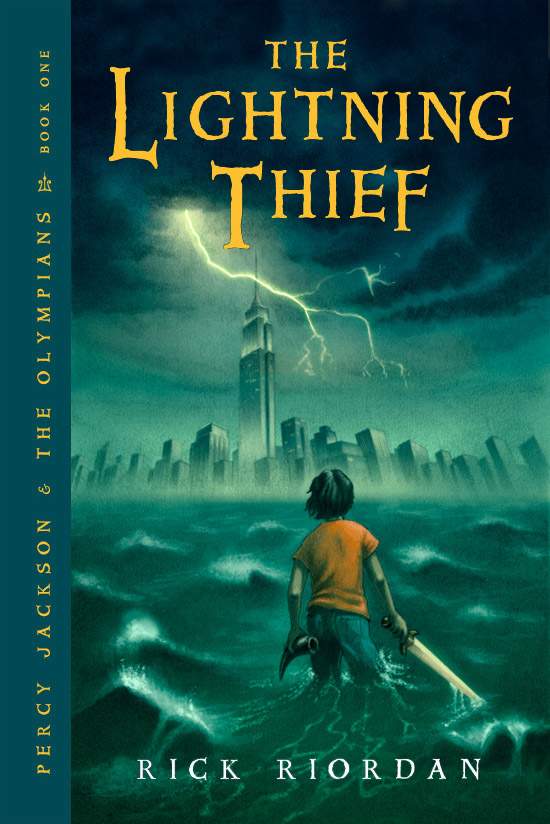
Grown-Up Reactions to Kid Lit: The Lightning Thief (Percy Jackson)
My friend MK is a high-school librarian, so both of us read a pretty remarkable amount of kid lit. In this maybe-semi-regular-feature, we discuss it!
Jilly: First thoughts on this one?
MK: Well, one of my first thoughts for this
one is that we have the opposite problem with our narrator, who reads as older
than 12 to me for most of the book.
Jilly: Totally agreed. I'd put Percy at about 14
MK: Yup. Especially since they make such a
big deal of his dyslexia/problems in school early on (which I realize are later
explained by his brain being wired for ancient Greek or whatever)—his
vocabulary is awfully expansive.
Jilly: I mean, with boys developing more
slowly, generally speaking, he could have been 15, with his vocab, his punning,
his proto-sex-drive. I feel like he and Annabeth were being set up as eventual
love interests (in the series) and their awareness of all that felt older than
12
MK: Actually that was the part the felt the
most authentic to me-he teases her for having a crush on Luke, but I don't
think there's sexual tension between the two of them at all.
Jilly: I don't think they have sexual tension
yet; I think they're being set up to develop it later.
MK: I wouldn't be surprised if that's the
case. I just think he's completely unaware of it, in the way that tweens can
still be friends-ish with the opposite sex.
Jilly: That's fair. You don’t think her crush
on Luke felt more 14-ish? I felt like Annabeth's vibe was generally older, which
increased my sense that Percy felt older, too. Like the anger with her dad
could have been 15 for me.
MK: Well, you said it yourself- she seems
older because she's a girl. I think their relative maturity levels make sense.
Jilly: I think they do, but she felt older to
me AS a girl. Anyway, we can agree that the kids these days, they grow up so
fast.
MK: Hahahaha. Yes.
Jilly: What did you think of the
characterization of the myths and the gods etc.?
MK: I liked it, but I also got this sense of
"This will go PERFECTLY with our unit on mythology!"
Jilly: Percy's recall of all the myths sometimes felt
a bit forced
MK: YES. Especially from someone who is flunking
tests on the subject!
Jilly: I can't imagine ANY 6th grade class
going into that much depth with mythology, either. That level of memorization
is high school or older to my mind
MK: I also found the "misunderstood
troublemaker finally finds his place" narrative not overly believable,
because the place turned out to be "among super intelligent nerds."
Jilly: Yeah. The ways that he made trouble
honestly felt more like the accident-prone kid than anything
I think part of that
was Riordan playing to his audience of, presumably, 10-year-olds
MK: Yes.
Jilly: Like "HAHAHA HE DID WHAT???" But
if that kid were in a classroom, I think most teachers' response would be
exasperation, but they'd try to work with him. They'd also understand that a
kid with dyslexia would need a different class load -- I mean, he was clearly
attending private Manhattan schools. I find it hard to believe that his
dyslexia would be allowed to totally dive-bomb his education at places like
that.
MK: Well right. They don't get any money if
they kick him out.
Jilly: All of this is definitely adult
quibbling though; I doubt many 10-year-olds would be bothered by any of it, and
it doesn't significantly impact the book, it's just some of what I see as a
string of "convenient short-cuts" the author makes. Like a trope of
YA is that authors want to get their kids not to have to deal with modern
technology, because it's too awkward for them to manage.
MK: Well, it also dates your books more
quickly.
Jilly: True. Anyway, Riordan had a good enough
reason for that work around, but I feel like a lot of his explanations for
those things--the "I just need to get the kid to place X or to not have
thing Y around"--were a bit "convenient." Sorta like "meuh,
good enough, let's get back to the underworld."
MK: That's fair. I felt like he was doing
The Odyssey for 12 year olds, but only some of the time.
Jilly: Do we think the book will get kids into
mythology in general? I feel like it could - it does make the myths feel human
MK: I feel like it gets kids More into
mythology if they already have an introduction. I just think it's introduced as
sort of intermediate level knowledge.
Jilly: What do you mean?
MK: Like, Percy is "remembering" a
bunch of stuff from class, but some of it seems like "Oh, we all know who
Zeus is."
Jilly: Oh, that's fair. Yeah, and for gods like
Hephaestus, that sort of "duh, we all know THIS guy" thing is asking
a lot.
MK: Exactly. And I think references can get
readers interested in learning more, but if there's a base level of
understanding you need to even Get the reference, that's either frustrating or
you ignore it completely.
Jilly: Right--you skim right past it and never
find that myth, or even think to want to. Like the Aphrodite cabin is only
referenced as being monstrously vain.
MK: Yeah, we definitely get the PG version
of Aphrodite and Bacchus.
Jilly: No joke. The Diet Coke? C'mon now. All
of that said, I feel like it sounds like we didn't like this book, but I
thought it was pretty charming.
MK: Hahaha. Yes, it's very readable.
Jilly: I especially loved that Percy wasn't
Zeus's kid, which is what I expected.
MK: Okay but how annoying was it that it
took pretty much the whole book for him to figure out he has power over water?
JUST GET IN THE DAMN WATER.
Jilly: RIGHT? It was like, "I made a
fountain move, then I somehow made pipes spit water on my enemies, then I felt
immediately healed in water, and yet no one, truly no one, can determine who my
god-dad-or-mom is."
MK: "Weird, I get this strange feeling
every time I'm near water... must be a coincidence."
Jilly: I guess I chalked that up to the author
wanting to give his readers a mini-mystery they could definitely solve. Like
the sense that they got it, YESSSSS! CALLED THAT ONE BRO!
MK: Now I'm imagining a bunch of 10-year-olds reading it at the same time and being super smug. "Oh, you haven't
figured out who his dad is yet?"
Jilly: I mean...I would've been that 10-year-old. ATHENA CABIN TILL I DIE!
MK: Hahahaha. By the way, knowing that there
are a bunch of half-bloods running around, they sure give those assholes a lot
of leeway for capture the flag.
Jilly: no joke. That summer camp is a liability
NIGHTMARE.
Wednesday, May 7, 2014
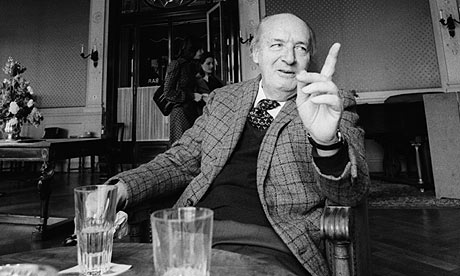
"There is no reading..."
"...only rereading."
Thanks for making me feel deficient in yet ANOTHER way, Vladimir Nabokov.
Of course as with so many of his pronouncements, I think Vivian Darkbloom was onto something here (a name I would never have known for an anagram the first time I read Lolita); the first time we read a book, we're plowing ahead for plot, trying to understand the fundamentals of character, and otherwise focusing on what's HAPPENING...it's only later that we can appreciate the minutiae of any really great work.
But what about only-maybe-great works? Do they benefit from this kind of careful attention, or would they shrivel up and die under such intent, scrutinizing light?
I'm especially scared to not-read-but-reread some of my childhood favorites.
The ones I've gone back to over and over throughout the years, of course, are safe--nostalgia has built a wall of "always gonna be awesome" around them (I'm looking at you, Lord of the Rings series).
But what about all those books I tore through at 8, 10, and 13--the John Bellairs novels that defined my 3rd-grade experience? Or the Victoria Holt romances my mom (possibly ill-advisedly) put me onto in the 5th-grade, and which made me feel so desperately grown up? Or all the "aren't I so SMART" real-literature-books I dutifully worked my way through in middle and high school?
I'm afraid to go back to those, and also desperate to--there was a period between ages 15 and 19 where I actually thought I liked Ayn Rand because it was a "grown-up" book I understood. I needed those four years to realize that simply identifying an author's dear-god-with-a-sledgehammer messaging wasn't the same as agreeing with it (or enjoying the prose).
...but I needed to reread it to realize that.
I'm having the thankfully fantastic experience of liking Harriet the Spy even more than I remembered right now--what other "classics" (or even just "ubiquitous offerings") hold up as well when you're an adult as they did when you were a kid?
Maybe more importantly, which ones don't?
Thanks for making me feel deficient in yet ANOTHER way, Vladimir Nabokov.
Of course as with so many of his pronouncements, I think Vivian Darkbloom was onto something here (a name I would never have known for an anagram the first time I read Lolita); the first time we read a book, we're plowing ahead for plot, trying to understand the fundamentals of character, and otherwise focusing on what's HAPPENING...it's only later that we can appreciate the minutiae of any really great work.
But what about only-maybe-great works? Do they benefit from this kind of careful attention, or would they shrivel up and die under such intent, scrutinizing light?
I'm especially scared to not-read-but-reread some of my childhood favorites.
The ones I've gone back to over and over throughout the years, of course, are safe--nostalgia has built a wall of "always gonna be awesome" around them (I'm looking at you, Lord of the Rings series).
But what about all those books I tore through at 8, 10, and 13--the John Bellairs novels that defined my 3rd-grade experience? Or the Victoria Holt romances my mom (possibly ill-advisedly) put me onto in the 5th-grade, and which made me feel so desperately grown up? Or all the "aren't I so SMART" real-literature-books I dutifully worked my way through in middle and high school?
I'm afraid to go back to those, and also desperate to--there was a period between ages 15 and 19 where I actually thought I liked Ayn Rand because it was a "grown-up" book I understood. I needed those four years to realize that simply identifying an author's dear-god-with-a-sledgehammer messaging wasn't the same as agreeing with it (or enjoying the prose).
...but I needed to reread it to realize that.
I'm having the thankfully fantastic experience of liking Harriet the Spy even more than I remembered right now--what other "classics" (or even just "ubiquitous offerings") hold up as well when you're an adult as they did when you were a kid?
Maybe more importantly, which ones don't?
Subscribe to:
Posts (Atom)